I first started using a VPS out of a practical need: I wanted to build a Telegram bot and deploy a small project service that needed to run continuously.
At the time, I knew almost nothing about servers; I only knew I needed to “buy a cloud server.” When I searched for “VPS,” I was overwhelmed by a flood of information—CPU, RAM, bandwidth, virtual hosting, dedicated servers… the more I read, the more confused I became.
What really got me using a VPS consistently was my actual experience with VDSina. Here is an overview of my journey.
I. My Initial Approach: Price-First (and the Pitfalls)
At first, my logic for choosing a VPS was crude and simple: buy the cheapest one available. I didn’t understand specs like CPU or RAM; I just thought, “As long as the configuration is decent, it’ll be fine.”
Predictably, the first server started having issues almost immediately: SSH connections frequently dropped, Node.js services would occasionally freeze, and even simple API requests would sometimes time out. What drove me crazy was that the Telegram bot I hosted would often go offline for no apparent reason.
That’s when I realized that a VPS isn’t just about “getting the job done”—it needs to run stably over the long term. I started looking for other providers, and that was when I first encountered VDSina.
II. Why Did I Stick with VDSina?
I didn’t have high expectations for VDSina at the start; I was just looking for a more stable alternative. However, after actually using it, a few things changed my mind.
First, the stability. Several of my test projects ran for extended periods without any of those “inexplicable disconnections.” This was crucial for me because many of my services—like bots and APIs—needed to run 24/7.
Second, the network performance was consistently stable. With the cheap VPS providers I’d used previously, latency would often fluctuate wildly, but that happened far less frequently with VDSina.
Another plus was the clean system environment; reinstalling the OS and deploying environments went smoothly. This is actually vital for developers, as you often need to test environments repeatedly. It was only after I had established a stable workflow that I began to seriously examine VPS specifications, rather than just focusing on the price.
III. What exactly are CPU, RAM, and bandwidth? Insights from my own experience
Before using VDSina, I used to look at VPS specs without really understanding what they meant in practice. It wasn’t until I actually started running projects that I grasped the real-world impact of these parameters.
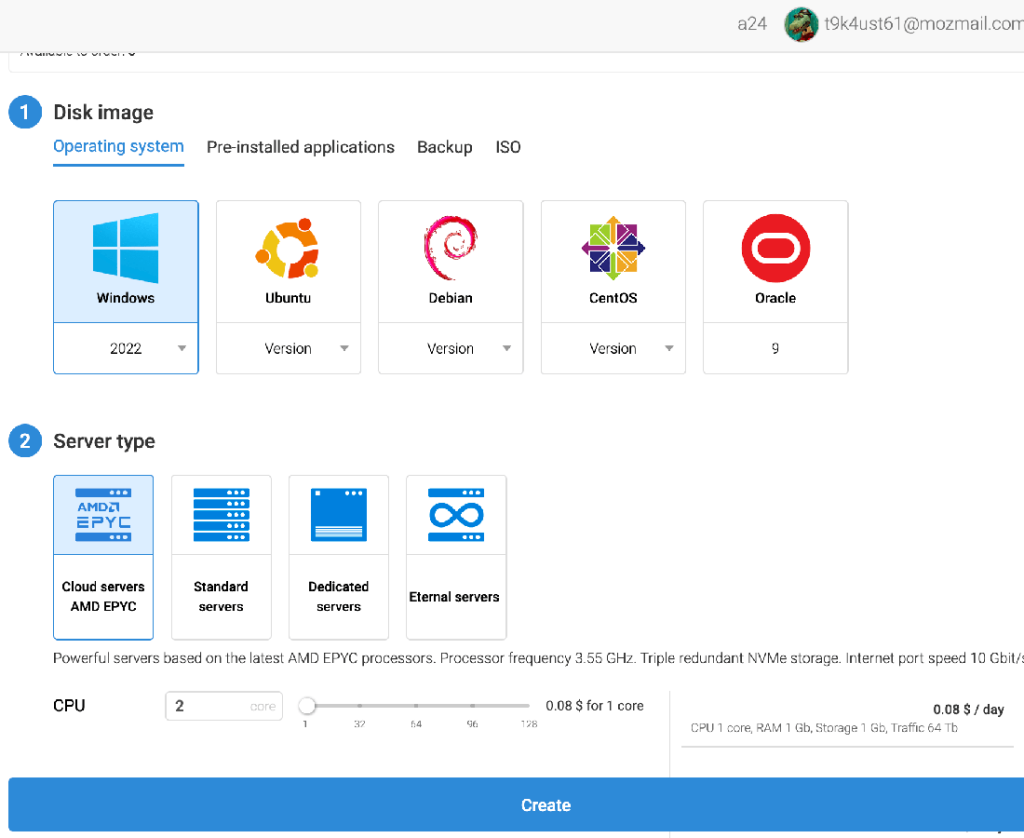
For me, the CPU’s performance is most noticeable when handling concurrent tasks. When performing data scraping or making concurrent API requests, for instance, an underpowered CPU causes the entire service to slow down significantly or even freeze. Simply put, the CPU determines “how many things you can handle at once.”
RAM is more about “capacity.” I once tried running a Docker environment on a VPS with 1GB of RAM, but the system crashed almost immediately after starting just a few services; it only stabilized after I upgraded to 2GB or more. The more RAM you have, the more programs you can run simultaneously, and the less likely the system is to crash.
Bandwidth was the factor I most often misunderstood. I used to think bandwidth was synonymous with “internet speed,” but it actually determines the volume of data that can be transferred within a given timeframe. If the bandwidth is too low, accessing the website or API will still be sluggish, even if the server has a powerful CPU.
In my experience with VDSina so far, the balance between these three factors has been excellent; no single component acts as a significant bottleneck.
IV. What real-world projects have I run on the VPS?
Once I started using VDSina reliably, I began to view the VPS as a long-term development tool rather than just a generic “server.”
My first project was a Telegram bot. This was the scenario where I relied most heavily on the VPS, as the bot needed to run 24/7—something impossible to achieve by keeping my local computer on all the time. With previous VPS providers, instability was a major headache; frequent, brief disconnections would interrupt the bot’s service.
However, since moving to VDSina, these issues have become far less frequent. The most noticeable benefit for me is that I no longer have to check daily to see if the bot is still running; I can simply let it operate continuously with peace of mind.
Later, I began deploying API services—such as weather interfaces and data processing endpoints—as well as various automated script tasks. These services share a common trait: they require no manual intervention but demand stable, uninterrupted operation. A common issue I used to face with low-cost VPS providers was that services would frequently crash—usually due to insufficient resources or network instability.
After migrating to VDSina, managing these services became much more “hassle-free.” I could focus on the code logic itself rather than constantly troubleshooting server issues.
Later on, I even started using VPS instances to host small websites, such as project showcases and API testing pages. It was during this phase that I realized the true value of a VPS: it isn’t just a server, but an infrastructure capable of consistently supporting your ideas.
Throughout this journey, VDSina has served as a “stable foundation” for me. It may not be the most complex solution, but it allows me to dedicate my energy to development rather than maintaining the underlying environment.
V. From Trial and Error to Stability: How My Approach to Choosing a VPS Has Changed
After a few disappointing experiences with VPS providers, my criteria for selecting a server have completely shifted.
I no longer focus solely on price; instead, I prioritize the overall experience.
I look for factors like sufficient stability (avoiding frequent disconnections), consistent network latency (rather than speeds that fluctuate wildly), genuine CPU availability (avoiding severe overselling), and system flexibility (the ability to freely deploy various environments).
Guided by these standards, I gradually migrated my main projects to VDSina, eliminating the headache of constantly switching servers.
VI. How Should Beginners Understand VPS Specifications?
If you are new to VPS hosting, you can understand the specs in very simple terms:
The CPU determines how many tasks you can handle simultaneously—such as concurrent user requests or script execution; RAM determines how many programs can run at once; and bandwidth determines access speeds and data transfer capabilities.
A common mistake beginners make is focusing exclusively on CPU specs or price. In reality, a VPS is an integrated system; if any single component is too weak, the overall user experience suffers.
From Tinkering with Servers to Stable Deployment
My journey—moving from a focus on price to prioritizing stability—represents an evolution in my understanding of VPS hosting.
My advice is simple: first, clarify your intended use; next, understand the basics of CPU, RAM, and bandwidth; and finally, choose a stable provider for the long term.
For me, stable performance matters more than a low price, and VDSina strikes an excellent balance between the two.








+ There are no comments
Add yours