
I. Initially, I didn’t understand the concept of “Managed VPS” at all
When I first encountered VPS technology, I had absolutely no concept of “managed” services.
My understanding back then was very simple: buy a remote server, log in, set up the environment, run programs, and deploy projects—that was it. As for system maintenance, security updates, or service monitoring, I didn’t even realize their importance at the start.
At the time, I found “managing my own server” quite rewarding, but once I started running multiple projects simultaneously, that model quickly became impractical.
I was running Telegram bots, API services, scheduled tasks, and test environments—all of which required continuous operation. Whenever the server encountered even a minor issue, I had to immediately halt my development work to address it.
It was during this period that I first encountered the concept of “Managed VPS/VDS” and began using VDSina‘s services.
II. Why did I switch to the Managed VPS/VDS model?
Initially, I was resistant to the idea of ”managed” services because I was used to having total control over the server. However, I eventually realized a key point: a developer’s real bottleneck isn’t a lack of server management skills, but rather the waste of time spent on repetitive management tasks.
For instance, I once had an API service crash unexpectedly due to a minor issue with the system environment. That moment made me realize I was spending far more time “fixing the server” than actually writing code.
Then there were routine issues—monitoring service status, automatically restarting processes, and troubleshooting logs. While none of these tasks were difficult on their own, they constantly disrupted my development workflow.
So, I decided to try a managed VPS/VDS solution, hoping to offload these basic operational tasks to a more stable environment.
III. My first impressions of using VDSina Managed VPS
When I first used VDSina‘s managed VDS, the most immediate impression wasn’t a “boost in performance,” but rather a “reduction in interruptions.”
With standard VPS setups, I frequently had to log in to check the server status and verify that services were still running; I would sometimes even experience inexplicable disconnections or process stoppages.
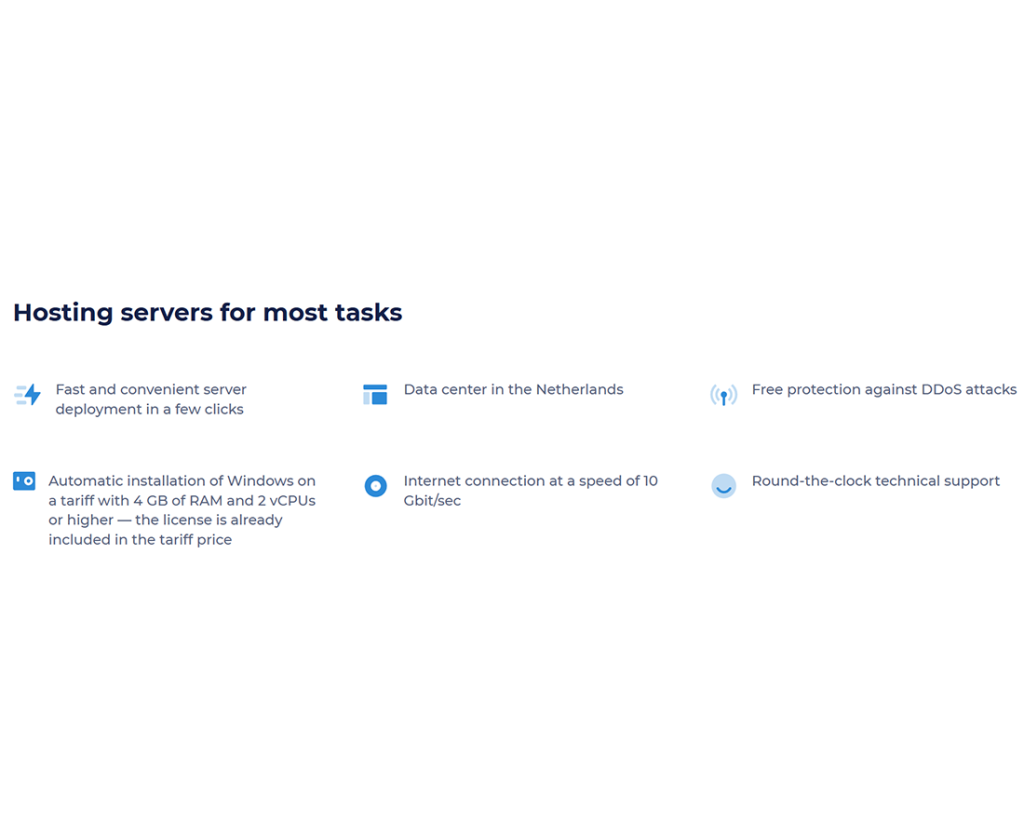
In VDSina‘s managed environment, however, these issues occurred far less often. I no longer need to frequently “check the server”; instead, I can simply assume it is always online.
This shift has a significant impact on the development workflow, transforming the process from “operations-driven development” to a model where “development drives the disappearance of operations tasks.”
In other words, the server is no longer something requiring constant attention; it has become a background element.
IV. How I actually use the managed VDS on VDSina
Once the setup stabilized, I began migrating multiple projects into this single managed VDS environment, rather than managing them across scattered servers.
The first to be migrated was a Telegram bot, as it required constant uptime and high stability. On my previous VPS, I frequently had to manually verify its status or even restart the service on the fly.
After migrating to VDSina, however, such issues became rare; the bot runs reliably without requiring frequent intervention.
Later, I migrated my API services and scheduled task systems as well. These services share a common trait: they run continuously but experience irregular traffic—sometimes seeing almost no requests, and other times facing sudden spikes in load. If server stability is poor, response latency or task backlogs easily occur.
In the managed VDS environment, this “volatility” is greatly reduced; the system operates more like a reliable, always-on service platform rather than an experimental setup requiring constant maintenance.
Eventually, I even consolidated some small web projects and test environments onto the same platform. The biggest change wasn’t performance, but the drastic reduction in management overhead. I no longer need to constantly switch between machines or deal with environment inconsistencies.
V. What is the biggest change brought by managed VPS/VDS?
If I had to summarize the impact of a managed VPS, it wouldn’t be about the technology itself, but rather a shift in how I work.
When using a standard VPS, I constantly had to split my attention between development and server maintenance. Even a minor issue could disrupt my entire development workflow.
In VDSina’s managed environment, these disruptions have significantly decreased. I can now focus more on the code itself rather than worrying about server status.
This change might seem minor, but over the long term, it has a profound impact on efficiency by eliminating a vast number of pointless interruptions. VI. My Overall Understanding of VDSina’s Managed VDS
After using VDSina’s managed VPS/VDS services for an extended period, I have developed a clearer perspective: it is not merely an “advanced VPS,” but rather a “development environment designed to minimize operational overhead.”
The focus is not on adding complexity to the server, but on making the server experience worry-free.
For those running long-term services, this state of “inherent stability” is crucial; it eliminates many unpredictable variables and reduces maintenance costs.
VI. Additional Insights into VDSina’s Standard VDS Plans
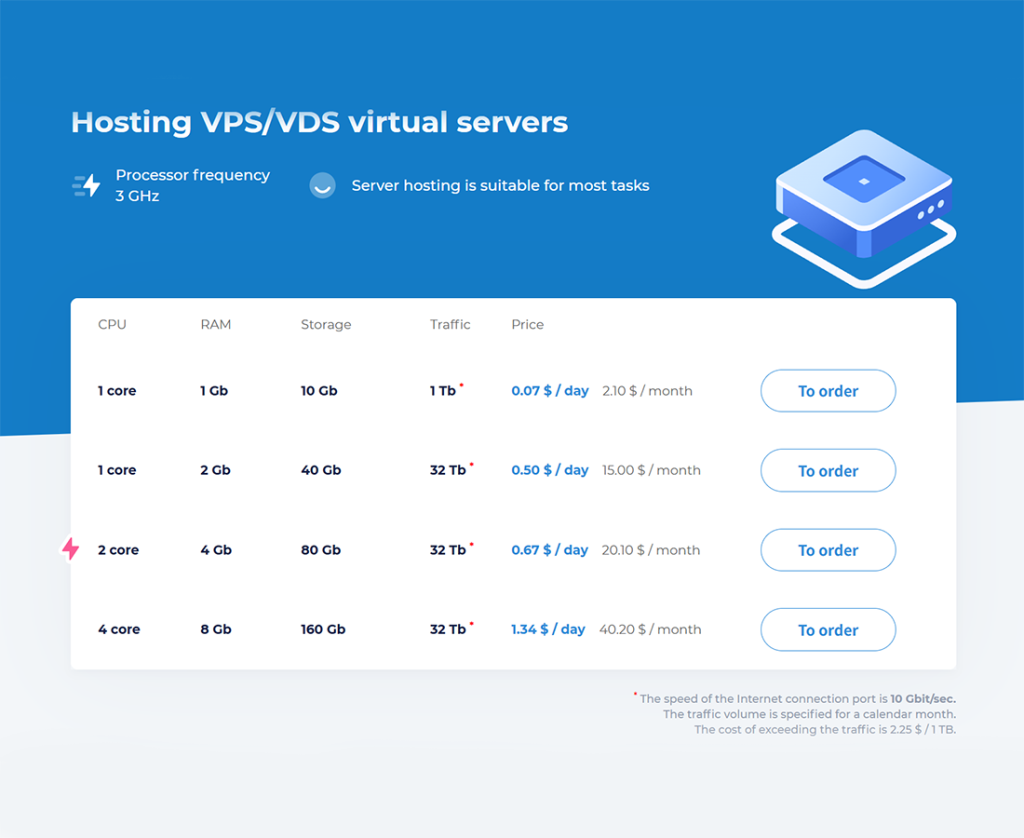
While using VDSina’s managed VDS, I also explored their standard VDS plans. These plans essentially offer VDS instances with superior resource isolation—distinct from traditional shared VPS setups—resulting in greater stability in real-world use.
The core specifications are standardized across the lineup, featuring 3GHz processors and 10Gbps network ports. Billing options include daily and monthly rates, with charges stopping immediately when the instance is powered down. Data usage exceeding the allowance is billed at approximately $2.25 per TB, offering a flexible usage model.
The plans come in four tiers, ranging from 1 vCPU/1GB RAM to 4 vCPUs/8GB RAM, catering to diverse scenarios such as testing, website hosting, small-to-medium business operations, and high-concurrency applications. Lower-tier plans are suitable for testing or static websites; mid-tier plans work well for cross-border e-commerce sites and API services; and high-tier plans handle heavier workloads.
In my view, the standout features of this series are fixed configurations, ease of use, and low costs—making them ideal for rapid deployment and early-stage projects.
VII. Shifting from Server Maintenance to Focused Development
If I were to summarize the value of managed VPS/VDS in a single sentence, it would be this: a server should not be a burden during the development process, but rather an infrastructure component that can simply fade into the background.
In my own experience, VDSina’s managed VDS transformed me from someone constantly occupied with server maintenance into someone who can focus entirely on business logic. That shift is far more valuable than any boost in technical specifications.










+ There are no comments
Add yours